Granular vs. Liquid Fertilizer: Key Differences for Lawn Treatment
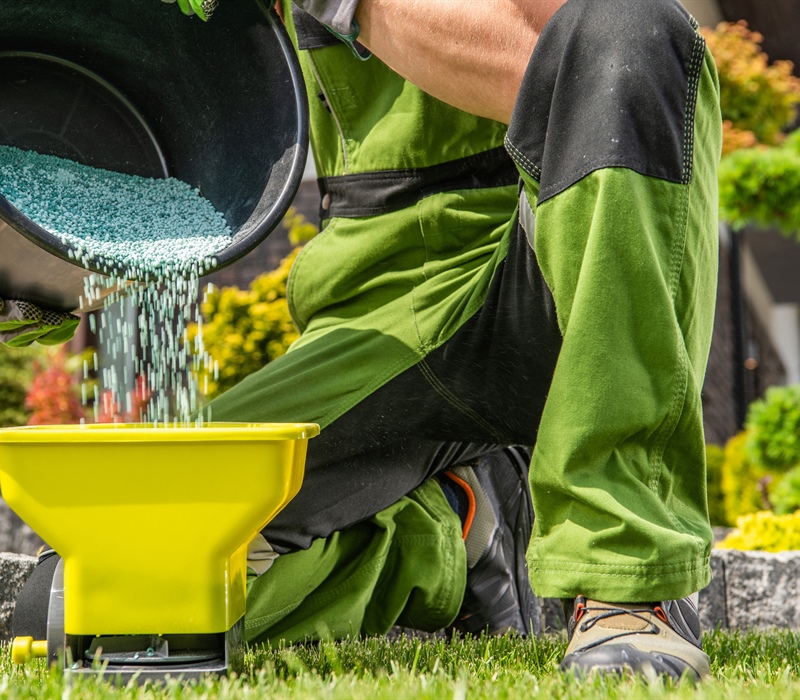
Fertilizer is one of the most effective ways to strengthen and protect your lawn, but the format you choose can make a major difference in results. Homeowners and professionals often weigh the benefits of granular and liquid fertilizers when building a lawn treatment program.
Both formats deliver nutrients that promote healthy, green turf, yet they differ in how quickly nutrients are absorbed, how evenly they spread across the yard, and how long the effects last.
Understanding these differences helps ensure a balanced approach that supports strong root systems and lasting lawn health.
When comparing granular and liquid fertilizer, there are several key factors worth exploring: how coverage and nutrient absorption differ between the two formats, the benefits of broadcast application versus targeted spraying, which type is better suited for Shakopee’s cool-season lawns, how applicators choose between slow-release and quick-action products, and the equipment needed for precise, safe results.
Doehling Landscape takes all these elements into account when designing the right fertilizer treatment plan, giving homeowners a clear understanding of what each option offers before making a choice.
Differences in Coverage & Nutrient Absorption Between Granular & Liquid Fertilizer
Granular fertilizer distributes nutrients through solid particles that slowly break down into the soil over time. This controlled release allows the grass to take in nutrients gradually, providing steady feeding for several weeks.
Coverage is influenced by how evenly the granules are spread across the lawn, often requiring multiple passes with a broadcast spreader to achieve consistent results. Because the nutrients remain on the soil surface until watered in, absorption depends on both soil moisture and microbial activity.
Liquid fertilizer, in contrast, delivers nutrients in a soluble form that is absorbed almost immediately by grass blades and roots. Applied with a spray system, the liquid coats the turf evenly, allowing for rapid correction of deficiencies such as nitrogen or iron.
While liquid treatments provide fast results, they tend to have a shorter lifespan compared to slow-release granules. Homeowners may notice greener grass within days, but the effects may fade within a few weeks without follow-up applications.
In a balanced program, both methods play a role: granules for long-lasting nutrition and liquids for quick results. When applied correctly, a professional fertilizer treatment combines the strengths of each format to maximize absorption and maintain consistent lawn health.
Broadcast Granular Application Versus Targeted Liquid Spraying
Broadcasting granular fertilizer is a common application method due to its ability to provide wide coverage across the entire yard. With a properly calibrated spreader, granules disperse evenly and feed large areas at once.
This is especially useful for routine maintenance, where the goal is to provide comprehensive coverage and ensure every section of turf receives nutrients. The even distribution also reduces the risk of patchiness, as long as the spreader settings are accurate and the operator makes overlapping passes.
Targeted liquid spraying offers a more precise approach. Liquid fertilizers can be targeted at areas showing stress, discoloration, or nutrient deficiency. Applicators can adjust concentration rates depending on whether the lawn needs a light feeding or a corrective dose.
This method is also effective when applying herbicides or micronutrients simultaneously, allowing multiple treatments in one pass. The precision reduces product waste and ensures problem areas receive the most attention.
Both methods have distinct benefits, and the best choice depends on lawn goals. While granular provides broad, uniform feeding, liquid spraying allows professionals to address specific concerns quickly. Many lawn services incorporate both methods strategically throughout the growing season to balance efficiency with precision.
Best Fertilizer Type for Shakopee’s Cool-Season Lawns
Cool-season grasses such as Kentucky bluegrass, perennial ryegrass, and fescues dominate in Shakopee, where winters are long and summers are moderate. These grasses thrive on steady nutrient availability, making granular fertilizer a strong choice for base applications.
Slow-release granules align with the growth cycles of cool-season lawns, particularly in spring and fall when growth is most vigorous. By delivering nitrogen and potassium gradually, they help turf establish dense roots while withstanding fluctuations in temperature.
Liquid fertilizer, however, remains valuable in this climate for its ability to deliver quick results during periods of stress. For example, during early summer heat or after heavy rainfall, liquid feeding can restore color and provide essential micronutrients rapidly.
Liquids are also effective in correcting deficiencies identified through soil testing, giving lawns a boost when granular products might be too slow to respond.
Professionals managing Shakopee’s lawns often use a hybrid approach, relying on granular fertilizer for season-long stability while supplementing with liquid applications to handle stress events. This combined strategy ensures consistent nutrition tailored to the unique demands of cool-season turfgrass.
Deciding Between Slow-Release Granules & Quick-Action Liquids
Applicators weigh several factors when deciding whether to use slow-release granules or quick-action liquids. Slow-release products are best suited for long-term feeding, as they reduce the need for frequent applications and limit the risk of nutrient leaching.
They are especially beneficial in programs designed to improve root depth and overall lawn resilience. By breaking down gradually, they deliver consistent nutrition even in varying weather conditions.
Quick-action liquids, in contrast, are chosen when immediate results are needed. After a period of drought, pest damage, or nutrient deficiency, liquid fertilizers provide an almost instant green-up.
They are also commonly used in the early stages of recovery programs, where rapid nutrient uptake helps grass rebound more quickly. Their flexibility makes them useful when timing is critical, such as before a big event or during seasonal transitions.
Professional applicators often combine the two, scheduling slow-release granules for routine feedings and layering liquid treatments during stress periods. This method not only optimizes plant health but also balances efficiency, ensuring lawns receive the right nutrients at the right time without excessive input.
Equipment Used for Even Application & Burn Prevention
The equipment used in lawn fertilization plays a major role in how evenly nutrients are delivered and whether the risk of burn is minimized. For granular applications, broadcast spreaders and drop spreaders are most common.
Broadcast spreaders cover wide areas quickly but require overlapping passes to avoid striping, while drop spreaders provide precision along borders and walkways. Proper calibration of spreaders is critical to ensuring even distribution and preventing concentrated spots that can cause turf burn.
Liquid fertilizers are applied using spray rigs, hose-end sprayers, or professional boom sprayers. These tools allow applicators to control droplet size, spray pressure, and coverage area.
Larger commercial rigs can handle wide turf areas with consistent spray patterns, while smaller sprayers allow precision targeting of problem areas. By carefully managing spray volume and dilution, applicators reduce the risk of nutrient overload that might damage the turf.
Doehling Landscape invests in calibrated, professional-grade equipment to maintain accuracy and protect lawns from uneven feeding. This ensures every application delivers nutrients evenly and safely, reducing burn risk while promoting uniform, healthy growth across every section of turf. Homeowners can trust that Doehling Landscape applies fertilizers with both effectiveness and safety in mind.
Expert Fertilization Support for Your Lawn
Doehling Landscape has the expertise to tailor a complete program that addresses each of these considerations. Whether it’s designing a treatment plan based on seasonal needs, selecting products suited to cool-season grasses, or applying fertilizers with professional-grade equipment, our team brings both knowledge and precision to every job.
Homeowners in Shakopee benefit from clear guidance and reliable service that keeps lawns strong from spring through fall.
If you are ready to take the guesswork out of fertilization, contact Doehling Landscape today. Request a free estimate, or reach out directly at 952-445-4336. Trust Doehling Landscape to provide proven solutions for your lawn, from fertilizer applications to complete seasonal care programs.