How Late In The Season Is Too Late To Winterize Your Lawn?
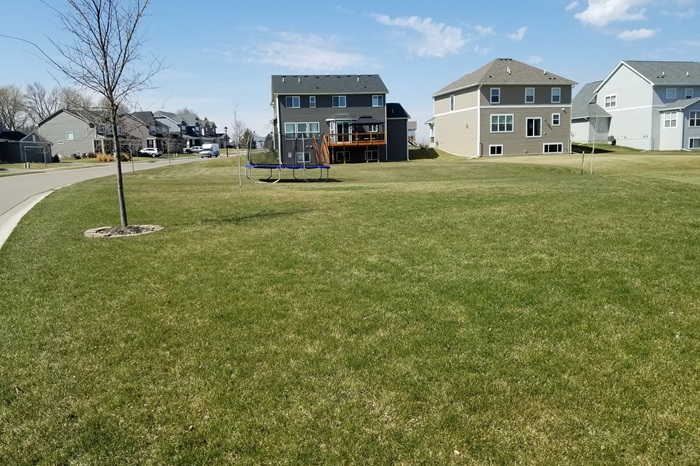
Timing matters when preparing a lawn for winter. Many homeowners wait until late fall to apply winterizer fertilizer, only to wonder if they have waited too long. Turfgrass does not follow the calendar; it responds to soil temperature, daylight length, and root activity. Understanding when grass roots are still actively absorbing nutrients—and when the ground has already shifted into dormancy—determines whether winterization supports strong spring growth or becomes a wasted application.
At Doehling Landscape, careful seasonal timing is central to effective turf management in Minnesota’s changing climate. In this guide, we will examine the ideal window for winterizer fertilizer, what happens if applications occur too late, how frost and soil temperatures affect nutrient uptake, what steps remain if you miss the prime opportunity, and how proper winterization directly influences spring recovery. Each factor plays a measurable role in turf health, root density, and early-season color.
Professional timing paired with proven lawn services can make the difference between thin spring turf and a dense, resilient lawn that rebounds quickly after winter dormancy.
Ideal Timing for Applying Winterizer Fertilizer Based on Soil Temperature and Root Activity
The ideal time to apply winterizer fertilizer is when top growth has slowed but roots remain metabolically active. For cool-season grasses such as Kentucky bluegrass, perennial ryegrass, and fescue—common throughout Minnesota—root systems continue absorbing nutrients until soil temperatures consistently fall below 40°F. Research from university turfgrass programs shows that the optimal soil temperature range for late-fall fertilization is between 45°F and 50°F at a 2-inch depth.
Air temperature alone is not a reliable indicator. Grass blades may appear dormant after the first hard frost, yet root systems often continue nutrient uptake for several weeks. During this window, nitrogen is directed primarily toward root storage rather than leaf production. This stored carbohydrate reserve supports winter survival and fuels rapid green-up once soil temperatures rise above 50°F in spring.
In regions like Shakopee, MN, this timing typically falls between late October and mid-November, depending on seasonal weather patterns. Monitoring soil temperature rather than relying on calendar dates provides the most accurate application window. Property owners who schedule seasonal lawn services during this narrow temperature range maximize nutrient absorption while minimizing runoff or volatilization.
What Happens If You Winterize Your Lawn Too Late in the Season?
Applying winterizer fertilizer after the ground has frozen significantly reduces effectiveness. Once soil temperatures drop below 40°F and remain there, root metabolic activity slows to near dormancy. Nutrients applied at this stage are unlikely to be absorbed efficiently, increasing the risk of surface runoff or nutrient leaching during snowmelt.
Frozen soil presents an additional barrier. Fertilizer granules cannot dissolve properly without moisture movement through unfrozen soil. If applied onto frozen ground, nutrients may remain on the surface until thaw cycles occur, at which point runoff risk increases. This reduces nutrient use efficiency and may contribute to environmental nutrient loading.
Late applications also fail to support carbohydrate storage within the crown and root system. Turfgrass relies on these stored reserves for winter survival and early spring growth. Without proper nutrient absorption before dormancy, lawns may exhibit delayed green-up, reduced density, and greater susceptibility to disease pressure once temperatures rise.
How Frost and Ground Temperature Influence Nutrient Uptake in Turfgrass
Frost affects leaf tissue first, but nutrient uptake depends on soil conditions. When frost forms overnight yet daytime temperatures allow soil to thaw, root systems may continue functioning. However, repeated freeze–thaw cycles stress turf crowns and gradually reduce root permeability. As soil temperatures decline toward 40°F, enzymatic activity within roots slows, limiting nitrogen assimilation.
Ground temperature determines microbial activity as well. Soil microbes are responsible for converting certain nutrient forms into plant-available nitrogen. Below approximately 50°F, microbial mineralization slows considerably. As a result, even if fertilizer is present, nutrient conversion becomes limited. This is one reason why late-season applications must occur before consistent deep soil cooling.
Timing impacts spring green-up because fall-absorbed nitrogen is stored in plant tissue and converted into structural components during winter dormancy. When soil warms in spring, turfgrass does not depend solely on new fertilizer applications; it draws from fall reserves. Lawns fertilized within the correct soil temperature window demonstrate earlier color response and thicker canopy development.
Protecting Your Lawn If You Miss the Optimal Winterization Window
If the optimal fertilization window has passed and soil temperatures are consistently below 40°F, applying nitrogen is no longer recommended. Instead, focus shifts to mechanical and cultural practices that reduce winter stress. Removing excess leaves prevents smothering and fungal development under snow cover. Prolonged leaf accumulation blocks light and traps moisture, creating ideal conditions for snow mold.
Final mowing height also influences winter survival. Cool-season turf should generally enter winter at approximately 2.5 to 3 inches in height. Grass left excessively tall increases matting risk under snow, while cutting too short weakens the crown. Adjusting mowing practices before consistent freeze conditions supports healthier overwintering tissue.
Soil structure improvements remain beneficial even late in the season if ground conditions allow. Core aeration before freeze improves oxygen diffusion and root resilience. Where fertilization is no longer viable, focusing on drainage correction and thatch management helps prepare turf for spring recovery without relying on late nutrient input.
How Proper Winterization Strengthens Root Systems and Improves Spring Lawn Recovery
Late-fall fertilization within the correct soil temperature window supports root elongation and carbohydrate storage. Nitrogen absorbed during this phase promotes rhizome development and crown density rather than excessive top growth. Research consistently shows that turf treated during active root periods exhibits greater shoot density the following spring.
Stored carbohydrates act as an energy reserve during dormancy. These reserves protect cell membranes from freeze injury and fuel early leaf development before new root uptake resumes. Lawns that receive properly timed winterization typically green up 7 to 14 days earlier than unfertilized turf in comparable climates.
Improved spring density reduces weed pressure. A thicker turf canopy shades soil surfaces, limiting germination of annual weeds. By strengthening roots before dormancy, properly timed winterization creates measurable structural advantages that extend beyond cosmetic color response.
Work with Doehling Landscape for Precision Lawn Winterization in Shakopee, MN
Seasonal timing requires local expertise. Doehling Landscape, located at 3095 4th Ave E Shakopee, MN 55379, applies data-driven turf management strategies tailored to Minnesota’s climate. By tracking soil temperature patterns and seasonal shifts, their team schedules winterization within the narrow window that supports root absorption and nutrient storage.
Professional programs address each component covered in this guide: optimal fertilizer timing, frost-related nutrient limitations, corrective care if timing is missed, and strategies that strengthen spring recovery. Coordinated mowing adjustments, leaf management, aeration planning, and nutrient applications are integrated into a comprehensive turf care approach.
To schedule a seasonal consultation or discuss a customized lawn care program, call 952-445-4336 or contact us through the website. Doehling Landscape provides experienced, locally informed service designed to protect your lawn through winter and position it for strong spring performance.