What Are the Signs Your Lawn Needs Aeration or Fertilization?
A healthy lawn does not decline overnight. Subtle changes in soil structure, turf color, density, and drainage often signal that the root system is under stress long before bare patches appear. Homeowners in Minnesota frequently assume watering alone solves most lawn problems, yet turf health depends just as heavily on oxygen exchange in the soil and proper nutrient balance. Understanding what your lawn is communicating can prevent long-term damage and restore strong, even growth.
In this guide, we examine how to identify compacted soil, what nutrient deficiencies look like in turfgrass, why grass may thin despite regular watering, how drainage issues signal the need for aeration, and when to schedule a professional lawn evaluation. These indicators are based on established turf science principles and reflect the lawn care standards followed by Doehling Landscape in Shakopee, Minnesota.
How to Identify Compacted Soil in Your Lawn
Compacted soil restricts air movement, root expansion, and water infiltration. One of the clearest signs is water pooling on the surface after rainfall or irrigation. When soil particles are pressed tightly together, pore space decreases, limiting oxygen availability to grassroots. Turf grown in compacted soil often develops shallow root systems, making it more vulnerable to drought stress and temperature fluctuations.
Another indicator is resistance when inserting a screwdriver or soil probe into the ground. In healthy soil, tools should penetrate several inches with moderate pressure. If penetration stops within the first inch or two, the soil structure is likely compressed. Turfgrass growing in these conditions may appear thin, slow-growing, and uneven in color due to restricted nutrient uptake.
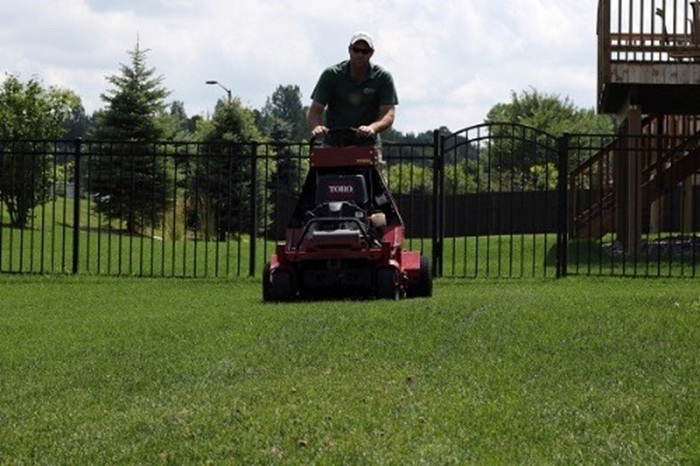
High-traffic areas are especially prone to compaction. Lawns subjected to foot traffic, pets, or heavy mowing equipment experience gradual soil density increases over time. Core aeration mechanically removes small plugs of soil, creating channels that restore oxygen flow and encourage deeper root growth.
Recognizing Nutrient Deficiency Symptoms in Turfgrass
Nutrient deficiencies often appear as discoloration or irregular growth patterns. Nitrogen deficiency typically causes uniform pale green or yellowing across the lawn, starting with older blades. Phosphorus shortages may create darker bluish-green turf with poor root development, while potassium deficiency can result in marginal leaf burn and increased susceptibility to disease.
Patterns provide important clues. If discoloration follows a consistent spread across the lawn, the issue may be systemic nutrient depletion rather than localized disease. Soil testing remains the most accurate method to confirm deficiencies, as visual symptoms alone can overlap between nutrient imbalance and environmental stress.
Balanced fertilization programs address these deficiencies by supplying nutrients in controlled, seasonally appropriate applications. Proper nutrient timing supports steady growth, improved root mass, and stronger resistance to environmental stressors.
Why Grass Thins Out Even With Regular Watering
Water alone does not guarantee turf density. Grass may thin due to shallow root systems, compacted soil, nutrient depletion, or excessive thatch accumulation. When roots remain near the surface, they struggle during heat or dry periods despite irrigation. This often results in patchy areas that never fully recover.
Overwatering can also contribute to thinning. Saturated soil reduces oxygen availability, limiting microbial activity and weakening root development. Turfgrass requires a balance of moisture and oxygen; when either is lacking, density declines. Disease pressure increases in persistently damp conditions, further contributing to thinning patches.
Environmental stress compounds these issues. In Minnesota’s seasonal climate, temperature swings place additional strain on turf systems. Without proper soil structure and nutrient availability, even well-watered lawns may fail to maintain thick, uniform coverage.
How Poor Drainage Signals the Need for Aeration
Poor drainage often appears as standing water that lingers long after rainfall. This indicates limited soil permeability. When water cannot infiltrate efficiently, grassroots remain submerged, reducing oxygen exchange and increasing the risk of root rot and fungal disease.
Drainage problems frequently stem from compacted clay soils or excessive thatch layers. Thatch thicker than half an inch acts as a barrier between soil and water, preventing proper absorption. Compacted layers beneath the surface further restrict downward movement.
Core aeration improves infiltration by relieving soil density and creating vertical channels for water and air movement. These openings promote deeper rooting and help stabilize moisture levels, reducing stress associated with saturated or drought-prone soil conditions.
When to Schedule a Professional Lawn Evaluation
A professional evaluation is appropriate when discoloration, thinning, drainage problems, or uneven growth persist despite routine maintenance. Repeated seasonal decline often signals underlying soil imbalance rather than surface-level issues.
Early spring and early fall are optimal times for assessment in Minnesota. These transitional periods allow for soil testing, compaction analysis, and treatment planning before peak stress seasons. Evaluations may include inspection of root depth, thatch thickness, and overall turf density.
Homeowners seeking tailored analysis and structured treatment plans can consult Doehling Landscape for a comprehensive lawn assessment based on soil conditions, turf type, and seasonal demands.
Professional Lawn Care Support in Shakopee, MN
Persistent compaction, nutrient imbalance, thinning turf, and drainage concerns require systematic correction. Doehling Landscape, located at 3095 4th Ave E Shakopee, MN 55379, provides science-based lawn care solutions tailored to Minnesota’s soil and climate conditions. Their team evaluates root health, soil density, and nutrient levels before recommending corrective treatments.
From core aeration and structured fertilizer programs to long-term turf management planning, their services address the underlying causes of lawn decline rather than masking surface symptoms. If your lawn shows signs discussed above, call 952-445-4336 or contact us to schedule a professional evaluation and build a strategy for sustained turf health.