What Causes Patchy Grass Growth Even When You Fertilize Regularly?
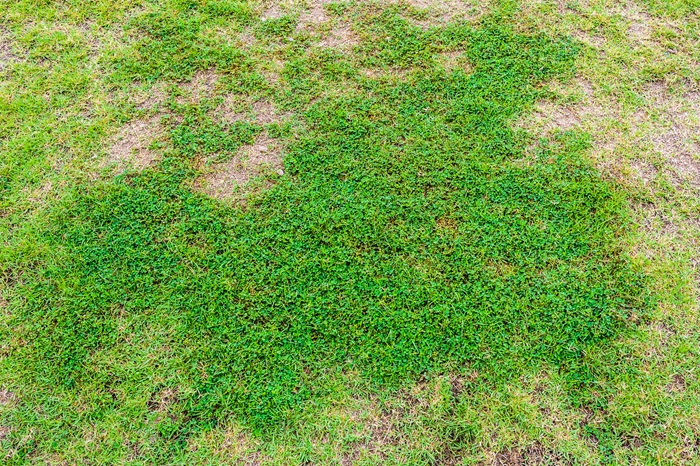
Few lawn problems are more frustrating than patchy grass growth, especially when you fertilize on schedule and expect even, healthy results. When bare or thin spots appear despite regular feeding, the issue is rarely the fertilizer itself. Turfgrass growth depends on a complex interaction between soil structure, water distribution, root health, light exposure, and nutrient availability. If one of these factors is off balance, grass cannot use the nutrients you apply. The result is uneven density, discoloration, and weak turf performance across different areas of the yard.
At Doehling Landscape, we regularly see lawns in Shakopee where fertilization programs are in place, yet turf still struggles. The root causes often include soil compaction, irrigation inconsistencies, hidden pest or fungal activity, improper soil pH, and environmental stress from shade or excessive sun exposure. Each of these factors can limit nutrient uptake and restrict healthy growth. In the sections below, we examine how compaction interferes with absorption, how uneven watering creates stress patterns, how pests and disease disrupt root systems, how pH imbalance causes nutrient lockout, and how light conditions influence grass density—so you can better understand what’s happening beneath the surface.
Understanding these variables is critical for anyone investing in professional lawn services or managing turf independently. Fertilizer alone does not correct structural soil problems, irrigation flaws, or environmental stress. Identifying the true cause of patchiness is the first step toward restoring uniform growth and long-term turf resilience.
Soil Compaction and Its Direct Impact on Nutrient Absorption
Soil compaction is one of the most common causes of patchy grass growth in fertilized lawns. When soil particles are compressed tightly together, pore space decreases. These pores are critical because they hold oxygen and water, both of which are required for root metabolism. Turfgrass roots require oxygen for respiration; without it, root growth slows, nutrient uptake declines, and localized thinning begins.
Compacted soil also physically restricts root expansion. Healthy turf develops an extensive root system that explores deeper soil layers for moisture and nutrients. In compacted conditions, roots remain shallow and weak. Even when fertilizer is applied at proper rates, nutrients remain inaccessible if roots cannot reach them. This often results in uneven growth patterns, especially in high-traffic areas where soil density is highest.
Core aeration is a widely documented method for alleviating compaction by removing soil plugs and restoring pore space. On the Doehling Landscape aeration service page, the importance of mechanical soil loosening is emphasized as a way to improve air exchange and fertilizer efficiency. Incorporating structural soil improvement into routine lawn services programs supports deeper root systems and more consistent turf density across the property.
How Uneven Watering Patterns Create Patchy Lawn Growth
Inconsistent irrigation is another leading cause of patchy grass, even in fertilized lawns. Turfgrass requires uniform moisture distribution to transport dissolved nutrients into the root system. When irrigation coverage is uneven, some areas receive excess water while others experience drought stress. This leads to variability in growth rate, color, and density.
Overwatered zones often develop shallow roots due to consistently saturated soil. These roots remain near the surface and are more vulnerable to heat and disease. Meanwhile, underwatered sections suffer from reduced nutrient mobility. Nitrogen and other essential elements must be dissolved in soil water before plant uptake occurs. Without adequate moisture, fertilizer remains unused, and grass becomes thin or dormant.
Drainage patterns also influence patchiness. Low spots may accumulate runoff, leading to oxygen deprivation, while slopes may dry quickly. Turf management programs that include irrigation calibration and soil evaluation help maintain consistent growth conditions. Uniform watering allows fertilizer to perform as intended, preventing irregular turf performance.
Lawn Pests and Diseases That Cause Hidden Root Damage
Subsurface pests and fungal pathogens frequently cause patchy growth patterns that resemble nutrient deficiency. White grubs, for example, feed on turfgrass roots, severing the plant’s ability to absorb water and nutrients. Even if fertilization is timely and balanced, root loss prevents uptake. Damaged sections often feel loose underfoot because the root system has been compromised.
Fungal diseases such as brown patch or dollar spot also interfere with nutrient utilization. These pathogens attack leaf blades and sometimes crowns, disrupting photosynthesis. Reduced carbohydrate production limits energy available for root development, weakening turf overall. Disease activity often appears in circular or irregular patches that persist despite fertilizer applications.
Accurate diagnosis is essential because applying additional fertilizer does not correct pest or pathogen damage. Integrated turf management programs focus on monitoring, early detection, and appropriate treatment strategies. Addressing root health is fundamental to restoring uniform density and preventing recurring patchiness.
Soil pH Imbalance and Nutrient Lockout in Turfgrass
Soil pH directly affects nutrient availability. Turfgrass performs best within a specific pH range, generally between 6.0 and 7.0 for cool-season grasses common in Minnesota. When soil becomes too acidic or too alkaline, certain nutrients chemically bind to soil particles and become unavailable to roots. This process is known as nutrient lockout.
For example, phosphorus availability declines sharply in highly alkaline soils, while iron and manganese become less accessible as pH rises. Conversely, overly acidic soils can limit calcium and magnesium uptake. In both cases, fertilizer may be present in adequate quantities, yet grass exhibits deficiency symptoms because nutrients cannot be absorbed.
Soil testing provides measurable data on pH and nutrient levels. Adjustments such as lime applications to raise pH or sulfur treatments to lower it restore balance and improve nutrient efficiency. Correcting pH ensures that fertilizer programs function as intended and supports uniform turf performance across the lawn.
Shade, Sun Exposure, and Their Effect on Grass Density
Light availability significantly influences turf density and growth uniformity. Grass requires sufficient sunlight to drive photosynthesis, the process that converts light into energy. In shaded areas beneath mature trees or adjacent structures, reduced light intensity limits carbohydrate production. As a result, turf thins even when fertilized correctly.
Shade also increases competition from tree roots, which extract moisture and nutrients from the same soil profile. This intensifies stress in low-light areas. In contrast, sections exposed to prolonged direct sun may experience heat stress and rapid moisture loss, leading to localized dormancy or thinning if irrigation is not adjusted accordingly.
Microclimates within a single yard often explain why some areas thrive while others struggle. Matching grass species to light conditions, managing tree canopy density, and adjusting irrigation practices support more even turf growth. For site-specific evaluation and professional assessment, property owners can visit Doehling Landscape to review service options and detailed turf care resources.
Professional Lawn Analysis and Customized Turf Solutions
Persistent patchy grass growth requires a comprehensive evaluation of soil structure, irrigation performance, pest activity, pH balance, and environmental conditions. Doehling Landscape provides detailed lawn assessments designed to identify the exact cause of uneven turf density. Rather than relying on fertilizer alone, their programs address aeration needs, weed and nutrient management, seasonal cleanup, and long-term turf health strategies.
Located at 3095 4th Ave E Shakopee, MN 55379, Doehling Landscape serves homeowners seeking consistent, healthy lawn performance. Their team combines soil improvement practices, fertilizing and weed control programs, and site-specific recommendations to promote stronger root systems and uniform growth. Direct consultation allows for tailored solutions based on measurable lawn conditions.
If your lawn remains patchy despite regular fertilization, schedule a professional evaluation. Call 952-445-4336 or contact us to discuss your property’s specific challenges and develop a strategy that restores density, color, and long-term turf resilience.